
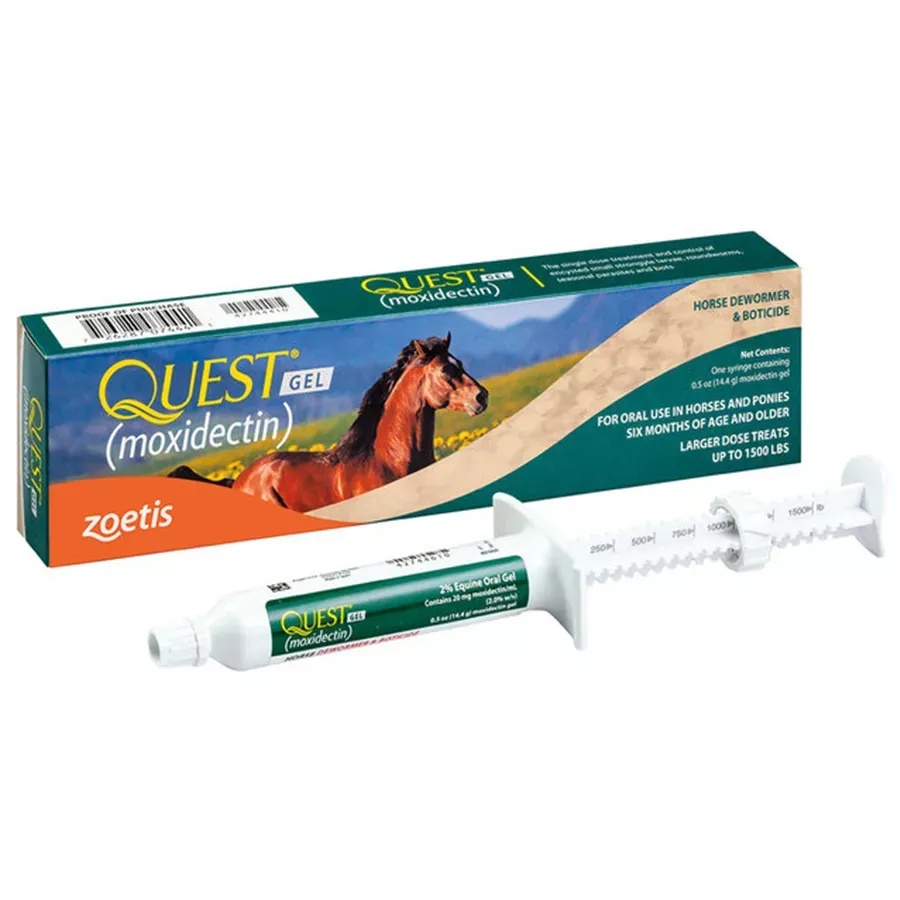
Recommended for early grazing season (spring) to treat small strongyles (including encysted forms) in a single dose, plus broad-spectrum treatment of large stronglyes (bloodworms), bots, pinworms, hairworms and stomach worms.
How parasites affect your horse’s health
Intestinal parasites can cause serious health problems in horses, including fever, diarrhea, colic and even death. Using the most effective product at the right time is essential to lower the risk of parasite diseases, prevent resistance to dewormers, and control the shedding of parasite eggs.
Benefits of Quest® Gel
Using the right dewormer, at the right time helps reduce parasitic resistance.1 Quest Gel is recommended in the early grazing season (spring). Experts agree that moxidectin, the active ingredient in Quest Gel is the treatment of choice at treating small stronglyes (including in encysted larval stages)1, the primary parasite of concern in horses over 9 months of age.1
Quest Gel has been evaluated as safe for use in breeding and pregnant mares, as well as in breeding stallions.
Effective broad-spectrum
treatment for early grazing season
In studies, moxidectin was significantly more effective than fenbendazole, the active ingredient in Panacur® POWERPAC at treating encysted small strongyle larvae. Moxidectin is also effective against large strongyles (bloodworms), bots, pinworms, hairworms and stomach worms. For late grazing season, learn more about our recommended dewormer Quest Plus Gel which also helps protect against tapeworms.

 No products in the cart.